Dengue fever is an emerging disease caused by a mosquito-borne virus and is a leading public health concern globally in tropical and subtropical regions. Commonly known as “breakbone fever” for the intense muscle and joint pain it causes, dengue runs the gamut from mild illness to potentially fatal complications. This article summarises the relevant details of dengue, its transmission, symptoms, prevention measures, and treatments.
What is Dengue Fever?
Dengue fever is caused by the dengue virus (DENV), a member of the Flavivirus family. Four different serotypes of the virus are known, namely DENV-1, DENV-2, DENV-3, and DENV-4. Infection with one serotype confers lifelong immunity to that type, but not to others. That means an individual can become infected as many as four times in their lifetime.
Dengue is mainly transmitted by the Aedes aegypti mosquito, which is most active in the early morning and before dusk. Another mosquito species, Aedes albopictus, can also spread the virus but does so less efficiently.
Global Burden of Dengue
According to the World Health Organisation (WHO), there are an estimated 390 million dengue infections annually, leading to clinical manifestations in approximately 96 million patients. Dengue is endemic in over 100 countries in Asia, the Pacific, the Americas, Africa, and the Caribbean.
Dengue has spread dramatically in recent decades, with cases rising because of urbanisation, travel, inadequate sanitation, and climate change, which create optimal conditions for breeding mosquitoes.
How is Dengue Transmitted?
Dengue is not transmitted from one person to another. So instead, the transmission cycle is:
- A mosquito lands and bites a person carrying the dengue virus.
- The mosquito carries the virus for 8-12 days before being infectious.
- Then, the mosquito bites a healthy person, transferring the virus.
In rare instances, dengue can also be transmitted through:
- Blood transfusion
- Organ transplantation
- To their baby (vertical transmission)
Symptoms of Dengue Fever
(The dengue symptoms appear 4 to 10 days after being bitten by an infected mosquito.) The illness usually lasts 2 to 7 days.
Common Symptoms Include:
- Severe fever (up to 104°F or 40°C)
- Severe headache
- Pain behind the eyes
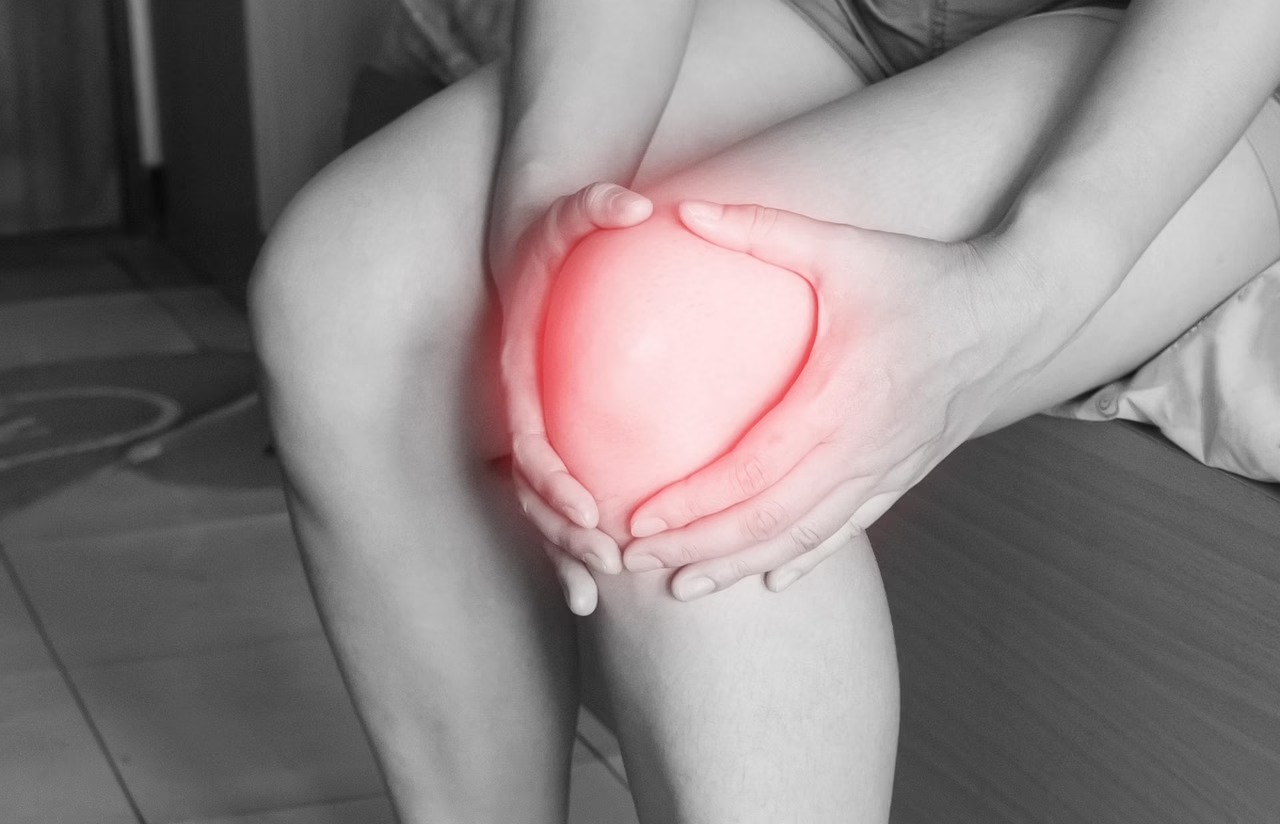
- Muscle and joint pain (hence the name “breakbone fever”)
- Nausea and vomiting
- skin rash (now 2–5 days after fever)
- Mild bleeding (nose or gums, easy bruising)
Severe Dengue (Dengue Hemorrhagic Fever/Dengue Shock Syndrome)
Severe dengue is a medical emergency that may result in:
- Severe bleeding
- Organ impairment
- Blood plasma leakage
- Low blood pressure (shock)
Signs of severe dengue usually develop 3 to 7 days after the initial symptoms and can include:
- Persistent vomiting
- Severe abdominal pain
- Difficulty breathing
- Bleeding gums or nose
- Restlessness or irritability
- Blood in vomit or stool
Diagnosis of Dengue
Diagnosis relies on clinical presentation as well as laboratory tests — particularly in endemic regions — mouse model, and has the highest specificity when there is concurrent analysis of serological tests. Some of the most common tests are:
- NS1 Antigen Test (early detection; within 1–5 days of illness)
- IgM and IgG antibody tests (after about 5 days)
- Confirmatory PCR (Polymerase Chain Reaction) test
Low platelet count and increased hematocrit levels, which can be detected via blood tests, are both signs of dengue severity.
Treatment of Dengue
There is no direct antiviral treatment for dengue. Management consists of supportive therapy to ameliorate symptoms and prevent complications.
For Mild Dengue Cases:
- Adequate rest
- Staying well hydrated to prevent dehydration
- Medication for Health, Fever and Pain Paracetamol (acetaminophen)
- Stay away from NSAIDs like aspirin and ibuprofen, which can raise the risk of bleeding
For Severe Dengue:
- Hospitalisation is required
- IV fluid therapy
- If needed, blood transfusions
- Detections of HR and BP are sporadically followed by frequent detections of blood counts
With early recognition and appropriate medical management, the mortality rate of severe dengue is reduced from more than 20% to less than 1%.
Prevention of Dengue
There is no cure, so dengue is best beaten by prevention. The two key strategies are controlling mosquito populations and preventing bites.
1. Remove mosquito breeding grounds
- Empty and scrub good containers that hold standing water (buckets, flower pots, tyres)
- Properly cover water storage tanks
- Flood all sources of standing water and persistently drain.
2. Personal Protection Measures
The guided process is indicative of an “enlightened”/more human approach, which is particularly useful for those who are not yet ready to specialize the vectors themselves.
- Wear long-sleeved and long-pants clothing
- Sleep under a mosquito net if you are in an endemic area
- Screens for Windows and Doors
3. Community-Based Actions
- Public education campaigns to bring awareness
- Adulticide, Fumigation to kill adult mosquitoes
- Neighbourhood clean-up drives
4. Vaccination
Because of its risk of severe dengue in seronegative individuals, a new vaccine for dengue, Dengvaxia (CYD-TDV), is only approved in certain countries for individuals aged 9–45 years who have had a previous dengue infection. It is not advisable for individuals without previous dengue, as it may raise the risk of severe disease upon re-infection.
New vaccines and antiviral medications are now in development and testing.
Dengue and Climate Change
Dengue outbreak aligns with climate change. This means the Aedes mosquitoes are finding their habitat expanding, due to warmer temperatures, increased rainfall, and urbanization. WHO confirmed: “Areas at risk that were previously considered safe are experiencing dengue for the first time. Surveillance and vector control programmes need to accommodate this evolving scenario.
Dengue in Children and Pregnant Women
Because they have immature immune systems, children are at a higher risk of severe dengue symptoms. If any warning signs are seen, parents should get their child medical attention as soon as possible.
In pregnant women, dengue can cause:
- Preterm birth
- Low birth weight
- Transmission to the baby (vertical transmission)
- Higher possibility of complications for the mother
Pregnant women should take special care to avoid being bitten by mosquitoes and should have regular check-ups during pregnancy in dengue-endemic regions.
Myths and Misconceptions Regarding Dengue
Myth: Papaya leaf juice is a cure for dengue.
FACT: There is no scientific proof that papaya leaves can cure dengue. They may have supportive attributes, but they should not supersede medical attention.
Myth: Mosquitoes come only from dirty water.
Fact: Aedes mosquitoes like clean stagnant water—even the water that collects in flower vases or bottle caps can become a breeding ground.
Myth: Dengue is transmitted from person to person.
Fact: Dengue is transmitted by the bite of its infected mosquito, not through touch.
Key Takeaways
- Dengue is a life-threatening viral disease transmitted by mosquitoes of the genus Aedes.
- Symptoms vary from mild fever to lethal hemorrhagic fever.
- Recovery depends on early detection and supportive treatment.
- Preventing its transmission via mosquito control & personal protection is key.
- Vaccines are offered in limited settings and are not universally recommended.
Conclusion
Dengue fever remains a global threat to health systems, particularly in crowded urban settings. Although it is still a potentially fatal disease, awareness, early diagnosis, and proper management can reduce its effects. I hope to raise awareness on how governments, communities, and individuals can do their part in eradicating dengue by maintaining a clean environment, safeguarding themselves from bites, and supporting public health campaigns.



Leave a Reply